
Best Diet for Men’s Every Age – Fitness & Weight Loss Diet
28 January 2021


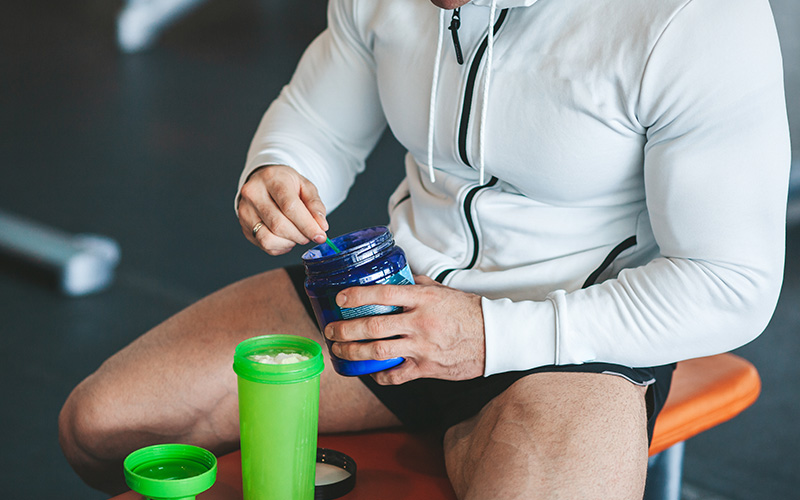
If you’ve ever taken a pre-workout supplement and noticed your face, ears, arms, or scalp begin to tingle, itch, or buzz, you’re not alone. Many people believe that when this sensation occurs, the supplement must be “working,” that their blood flow is increasing, muscles are engaging, or performance is being enhanced. In actuality, the tingling sensation has absolutely nothing to do with strength, endurance, fat burning, or exercise performance. This tingling sensation is a result of beta-alanine and is one of the most confusing side effects of supplements in the fitness industry. This blog post will explain what tingling is, why it occurs, if it’s safe, how beta-alanine functions, and who should take it.
The tingling sensation that occurs is known as paresthesia, a harmless nerve reaction that occurs when beta-alanine binds to sensory nerve receptors in the skin. These are the same nerves that are responsible for the sensation of itch and touch, not muscle contraction or strength output. When beta-alanine is introduced into the body too quickly, these nerves are triggered, and your brain sends a signal that you perceive as tingling or itching.
The actual performance benefit of beta-alanine is derived from something entirely different. Beta-alanine is an ingredient that raises the level of carnosine in muscle tissue. Carnosine is an acid buffer that delays the onset of burning in muscles and fatigue.
What this actually means in terms of training is that:
This means that beta-alanine is good for conditioning, circuits, high-rep training, HIIT, and volume training, not because it makes you stronger, but because it helps you tolerate the fatigue.
Beta-alanine does not directly promote muscle growth. This means that it also does not:
What it does is enhance training capacity. By postponing fatigue and muscle burning, beta-alanine enables you to:
Muscle growth then occurs indirectly, through the fact that you’re able to train harder, longer, and more frequently. Beta-alanine, therefore, is not a muscle builder. It’s a volume enabler. The muscle growth comes from the training, not the supplement.

The most frequent side effect is paresthesia, which refers to tingling, itching, or pins and needles sensations on the skin. This is harmless and will resolve.
It does not:
It will decrease as blood levels normalise and the body adjusts to its use. Other mild side effects may include:
The effective daily dose range is 3.2g–6.4g per day. But beta-alanine does not work like caffeine. It does not create immediate performance effects from a single dose. It works through muscle saturation. Taking beta-alanine once before a workout doesn’t do much acutely. Consistency matters more than timing.
Read Also: Pre-Workout Science: Why 200mg Caffeine + Beta-Alanine Works
The tingling sensation from beta-alanine is harmless, temporary, and neurological. It is not performance-related and definitely not required for effectiveness. Tingling has no relation to the efficiency of the performance. Beta-alanine works through long-term muscle saturation, not sensations. None of the supplements, be it BCAA or protein powders, show effectiveness via sensations of tingling. So, trust the output and make a judgment.
 100% Safe & Secure payments: