Energy Hacks: How Sunlight, Sleep Cycles & Circadian Rhythms Affect Fitness
27 December 2025


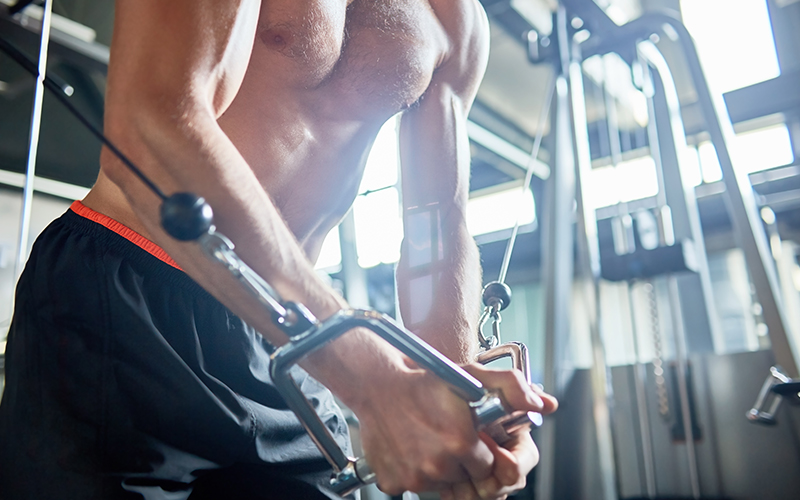
Muscle fibres don’t come in a single type. Instead, they come with a mix of slow-twitch and fast-twitch fibres. Both types of fibres are useful for different types of activities. Some help you to last for a long time, while the other type helps you to generate sudden forces. Learning about the types of muscle fibres can help you become a good athlete or a fitness enthusiast. Once you learn about the type of fibres you are working with, you can easily create a routine that meets your training requirements. What is Twitch in Muscle? A twitch is a sudden contraction followed by a sudden release of the muscle fibres due to a nerve signal. Every movement you make, whether you walk or lift weights, occurs due to thousands of twitches.
| Feature | Slow-Twitch Fibres (Type I) | Fast-Twitch Fibres (Type II) |
| Function | These fibres are designed for endurance and sustained activity. | These fibres are built for power and explosive movements. |
| Contraction speed | Contract slowly | Contract quickly |
| Fatigue resistance | Highly resistant to fatigue | Fatigue more quickly |
| Energy use | Use oxygen efficiently for long-duration activity | Use energy rapidly for short bursts of effort |
| Force production | Produce a lower force but can sustain it longer | Produce higher force and power |
| Common activities | Long-distance running, cycling, swimming, and steady moderate-intensity workouts | Sprinting, heavy weightlifting, jumping, and high-intensity interval training |
| Structural traits | Contain more mitochondria and capillaries, which help deliver oxygen and support long-term energy production | Generate greater power, but cannot sustain activity for long periods |
Training for slow-twitch muscles typically emphasises endurance. Examples of training methods:
This type of training helps to develop the following: • Muscular endurance • Oxygen usage • Fatigue resistance. This type of training is usually a priority for endurance sport athletes.
Fast-twitch muscles usually respond to high-intensity training. Examples of training methods for this type of training:
This type of training helps to develop the following: • Strength • Power output • Explosive speed. Athletes who take part in sprinting events, powerlifting, football, etc., usually focus on the development of fast-twitch muscles.
Muscle twitches may also occur in small amounts, even in the absence of exercise. Common reasons for muscle twitches are:
Muscle twitches tend to resolve on their own as your body recovers from these factors.

A fasciculation in a muscle is a small visible muscle movement under the skin, caused by spontaneous muscle fibre contraction. Reasons why fasciculations happen include:
Most fasciculations are harmless; however, in some instances where muscle twitches are increasing in severity, it is a good idea to seek medical help.
Read Also: Muscle Cramp Prevention in High-intensity or Long-Duration Training
Slow-twitch and fast-twitch muscle fibres have different functions that contribute to physical performance. Slow-twitch fibres contribute to endurance activities, whereas fast-twitch fibres contribute to explosive power. Most training regimens will include both fibre types to a certain degree. However, training intensity, load, and style can be altered to emphasise one over the other. Knowledge of the differences between the two will allow athletes to train more effectively to meet their performance goals.
While you address this concern, for all your gym supplements, we offer MuscleBlaze as a trusted source of creatine.
 100% Safe & Secure payments: