The Benefits of a Side Plank and How to Do It Safely
26 April 2026
Hello Ziddis! Are you “Team Planks” or “Team Side Planks”? The side plank is one of those simple exercises that actually deliver serious results. While it seems like this exercise is targeting your obliques, aka side abs, it is also challenging your shoulders, hips and core stability. If you are aiming for a stronger core, better posture or improved balance, you must know more and include this exercise in your workout routine.
Why are Side Planks Popular?
Side planks are usually done to train your core functionally by resisting your movement rather than creating it. Unlike crunches, they teach your body to stabilise the spine and prepare you for daily activities, not just your fitness goals. Here are some reasons why people believe side planks would help them:
They are functional
They are low in impact but highly effective
They create strong muscle activation
They do not put strain on your back as compared to many other ab exercises
Side plank variations can activate 50–70% of maximum muscle contraction, which is considered effective for strengthening
Benefits of side planks
Now that you know that side planks could be the best bet in your fitness journey, let’s help you understand the benefits of side planks:
Helps build stronger obliques
Improves your core stability
Improves your balance
Your body learns to control rotational forces
Great to build athletic strength
A strong core can reduce strain on the lower back and knees.
Research shows that core strengthening is linked to lower back pain
Side planks improve your posture
They keep your spine aligned
Helps prevent slouching
Side planks engage multiple muscle groups simultaneously, including abs, back, and hips
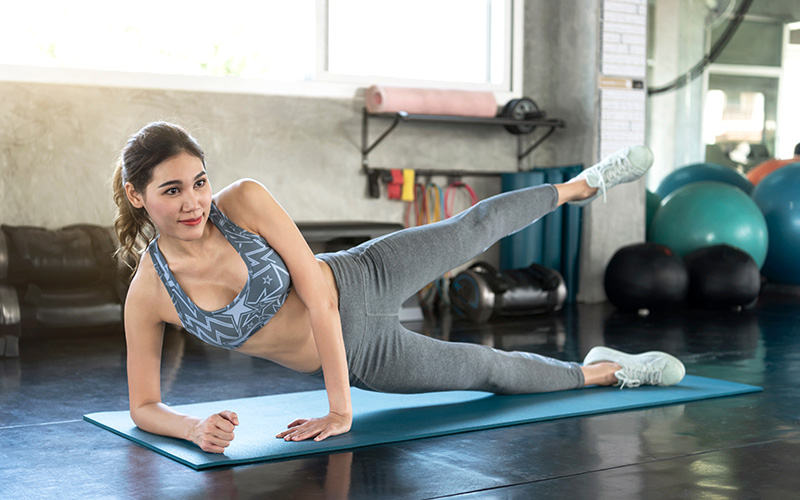
Side Plank Hip Dips
Hip and dips sounds like some dance move, right? Well, it is just as fun. Here is how you can do this move to add more movement and intensity to your side planks.
Steps to do it:
Start in your regular side plank position
Slowly lower your hip towards the floor
Lift it back up using your lower back
Swaddle between sides using your oblique strength
Feel the stretch in your sides and core
Repeat on loop
Pro tip: Do it while playing your favourite chatpate workout songs.
Here’s why it works:
It adds eccentric and concentric movement, not just to test your holding capacity
It increases muscle engagement and helps burn more calories than a normal plank
Builds endurance
It is like static strength training.
Side Plank Position and Rotation
Correct side plank position
Elbow directly under the shoulder
Body in a straight line (head → heels)
Core engaged, hips lifted
Avoid collapsing or twisting
Maintaining a neutral spine is key. Your core should resist gravity, pulling your hips down.
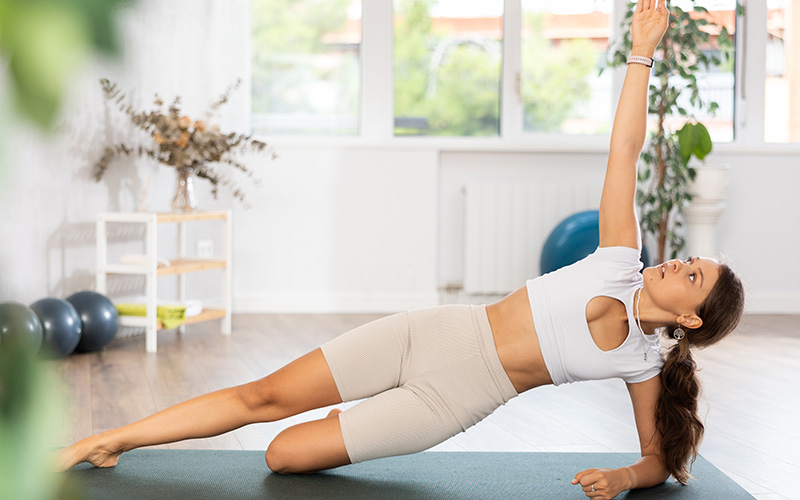
Side Plank Rotation
This advanced variation adds a twist:
From the side plank, extend the top arm upward
Rotate your torso and thread your arm under your body
Return to the starting position
Safety Tips for Effective Side Planks
Better safe than sorry side planks edition is here:
Do not let your hips sag because that can strain your lower back
Start with a knees-down modification
Keep your neck in a neutral position, not to look upwards or downwards, but straight forward.
Stop if and when you feel pain or discomfort
Increase your hold time or add more movement gradually, not all at once.
Make sure you wear comfy gym t-shirts so that your range of motion is not restricted.
The side plank is more than just a core exercise. It’s a full-body stability builder. It strengthens your obliques, improves balance, and protects your spine when done correctly. Start with the basic position, then progress to hip dips and rotations for better results. If your goal is fat loss + toning, then this fits perfectly into your routine. Just pair it with consistent movement and a solid diet for visible results.




 100% Safe & Secure payments: