Top 5 Supplements for Muscle Recovery
25 April 2023


Hi Ziddis! If your goal is to look leaner, fitter and more confident in your body, you have probably come across two popular strategies: cutting and body recomposition, aka recomp. They are both widely used in fitness culture. Both can work, and both are often misunderstood. The real issue isn’t which method is better. The real issue is choosing the wrong approach for your body, lifestyle and mindset. What works brilliantly for one person can completely fail for another.
Let us break down cutting and recomp in a practical, realistic way, so you can choose a strategy that actually fits your life, not just your goals.
| Cutting | Body Recomp |
| Cutting is an approach one takes for fatloss | Body recomp focuses on building lean muscle and the fatloss comes as a result of muscle building |
| You go on a calorie-deficient diet wherein you eat fewer calories than you burn | Protein intake is higher, and the focus shifts from calorie counting to protein counting, which is required for building muscle. |
| You end up losing fat while you train to preserve as much muscle as possible | The results are not measured on scale but in your body structure, strength and stamina |
| The approach is simple, direct and result-driven | It is a slower but more effective approach |
| You must be disciplined, consistent and tolerant of short-term restrictions | It is a more sustainable approach and requires long-term effort |
The classic fitness culture will typically include bulk and cut cycles:
This is very effective for advanced weightlifters, athletes, and people who take their fitness seriously and track everything down to the exact detail. However, for the average person, this is hard to maintain from a psychological and emotional standpoint.
Recomp, on the other hand, is more moderate. There is no extreme bulk and no extreme cut. The gains are slower, but the lifestyle is easier to maintain.
For most people with busy lives, stress, and irregular schedules:
A lean bulk is a small calorie surplus that is used for muscle gain with a small amount of fat. It is most suitable for individuals who are already lean, train regularly, and are comfortable with gaining some fat.
Recomp is most suitable for individuals who are:
For such individuals, merely lifting weights, consuming adequate protein, and training regularly will help them lose fat and gain muscle without having to go to extremes.
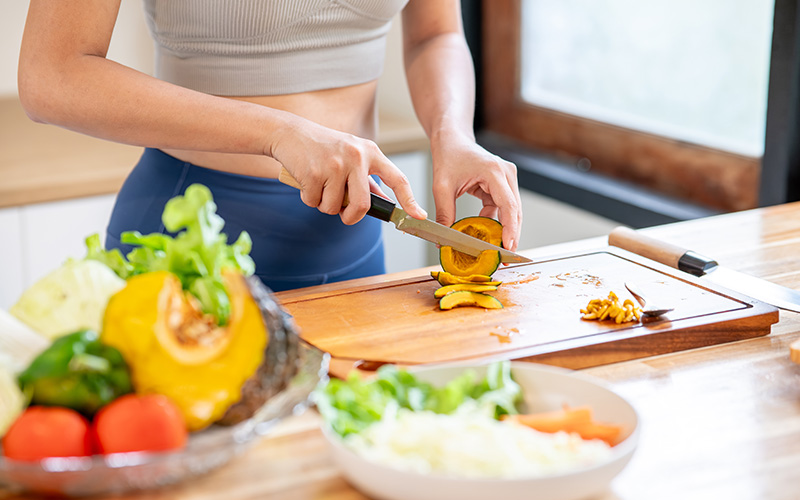
Let us understand how recomp is different from cutting the diet
| Aspect | Cutting Diet | Recomp (Body Recomposition) |
| Core Goal | Fat loss first | Fat loss + muscle gain together |
| Calories | Calorie deficit (10–25%) | Around maintenance |
| Protein Intake | High protein intake | High protein intake |
| Training Principle | Strength training is non-negotiable | Progressive resistance training |
| Cardio | Supports fat loss, doesn’t replace training | Optional support, not a driver |
| Lifestyle Focus | Discipline & structure | Consistency & sustainability |
| Recovery Focus | Sleep and stress management are critical | Long-term consistency matters |
| Mindset | Results-driven | Habit-driven |
| Common Mistakes | Extreme deficits, low protein, only cardio, crash dieting, muscle loss, unrealistic timelines | No progression, under-eating protein, scale obsession, inconsistency, quitting early, impatience |
| Timelines | Visible fat loss: 3–6 weeksMajor transformation: 8–16 weeks | Visible changes: 6–12 weeksClear body shape change: 3–6 months |
| Scale Changes | Clear drop | Minimal change |
| Sustainability | Medium | High |
Read Also: Body Recomposition: Everything You Need to Know
There is no better approach, only the approach you can realistically follow. Cutting will change your body quicker. Recomp will change your habits more easily. Most people don’t fail because they pick poor strategies; they fail because they pick strategies that don’t fit their reality. The best strategy is the one that fits your body, lifestyle, mindset, and patience level. Time to buckle up with activewear like comfy tank tops.
 100% Safe & Secure payments: