Creatine Monohydrate: The Ultimate Guide – Benefits, Dosage, and Myths
7 August 2024


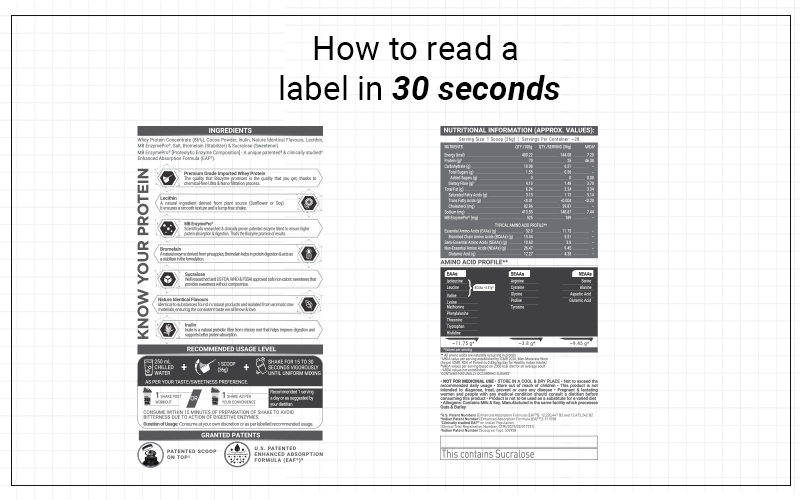
Take a look at any supplement shop or browse any fitness site, and you’ll see the same claims being made everywhere: premium quality, advanced absorption, muscle matrix blends, and clinically designed formulas. Every protein supplement is the best. Every brand is superior. And most people wind up picking one over the others based on design, social media, or sales rather than what’s in the bottle.
But protein supplement labels aren’t deceiving you; you simply don’t know how to read them.
With a little knowledge, you can evaluate a protein supplement in less than 30 seconds. No advanced nutrition knowledge. No chemistry expertise. Just label literacy.
The label on the front of a protein supplement bottle is for marketing, not education. Terms such as premium, ultra pure, high absorption, and advanced formula are not standardised terms. They have no meaning, no nutritional significance, and no legal standing. They are simply designed to sway purchasing decisions.
The first thing to examine is not the brand name or the flavour, it’s the correlation between scoop size and protein content.
Some brands tend to overstate the scoop size to make the protein content sound better. A supplement may contain 25 grams of protein per serving, but the serving size may be 45 or 50 grams. This means that nearly half the scoop is not protein.
Good protein powders will have a scoop size of 30-35 grams with 22-27 grams of protein. The ratio is more important than the actual number on the label. Protein density is a quick indicator of quality.
The next thing to examine is the ingredient list. The ingredients are listed in order of weight, not priority. If sugar sources, creamers, maltodextrin, vegetable oils, or flavouring bases are listed before the protein source, then you are not buying a protein supplement; you are buying a flavoured supplement with protein mixed into it.
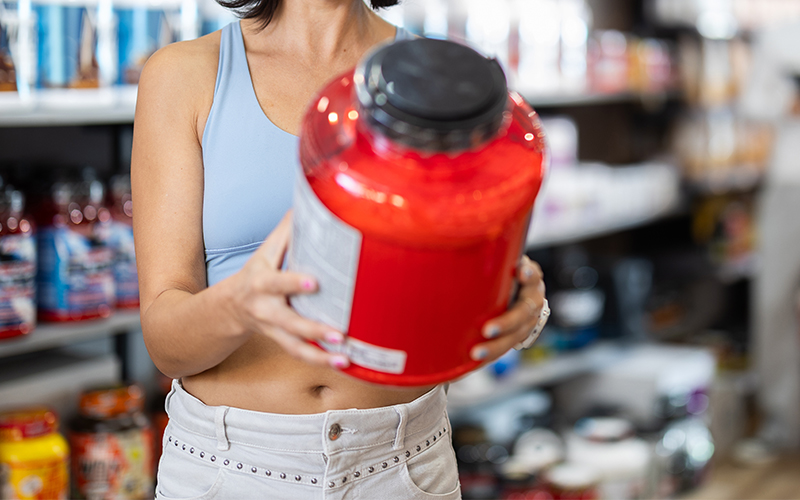
One of the most popular protein marketing gimmicks is amino spiking. This occurs when manufacturers spike the protein with cheap free-form amino acids such as glycine, taurine, arginine, or alanine. This increases the nitrogen content of the protein. The lab analysis will read this as “protein,” even though this amino acid doesn’t act like a complete protein in muscle growth.
The packaging may reflect high protein content, but the protein quality is enhanced by amino spiking rather than using real complete protein sources.
Another common protein marketing gimmick is proprietary blends. When a protein label indicates a “protein blend” or “muscle matrix” without specifying the proportions of each protein source, it obscures transparency. You won’t know how much of it is high-quality protein and how much is cheap protein filler.
High-quality protein doesn’t hide behind blends. It is transparent about all its components.
Then come the scientific-sounding words: high absorption, rapid uptake, advanced delivery system, nano-filtered protein, muscle matrix technology. These words sound very scientific but mean nothing. They are marketing speak, not scientific language.
Bad protein powders are all about complexity. Long lists of ingredients, technical vocabulary, multiple blends, multiple systems, and jargon are all there to confuse you.
When you come across a protein powder that is upfront about its protein sources, quantities, and ingredients, that’s probably the one you should be buying. It will show:
Read Also: How to Read Protein Labels & Make Better Choices
Analysing a protein label isn’t about being intelligent; it’s about being informed. A good protein doesn’t require gimmicks. It doesn’t require fanfare, it doesn’t require deception. If a protein brand has to impress you, it’s likely trying to hide something. If it’s honest, it won’t need to. Because true quality doesn’t have to scream. It’s evident. So the next time you are in the supplements aisle, not just for protein powder, but maybe oats protein or fit foods even, you know what not be attracted to.
 100% Safe & Secure payments: