The Right Foods to Keep Liver Healthy
2 May 2023


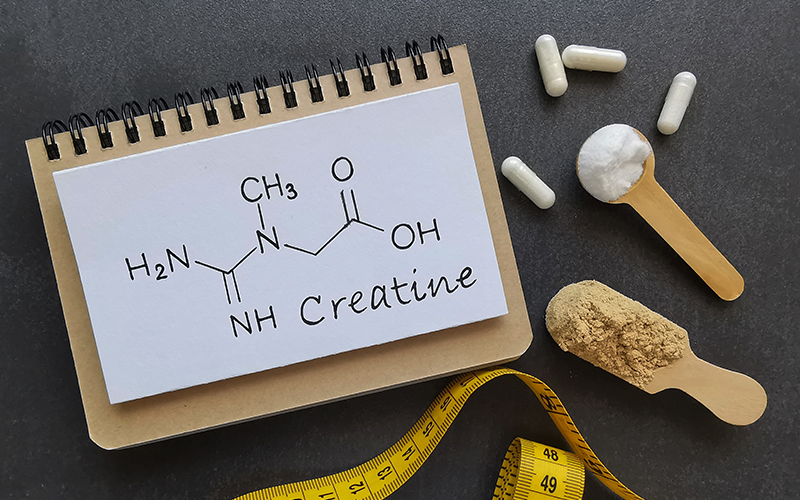
Hello Ziddis! Creatine is one of the most studied sports supplements in modern sports nutrition. It is commonly used for strength, power, performance, and recovery, and its safety record is backed by decades of scientific research. However, one fear has persisted on the internet: “Creatine causes hair loss.” This myth has prevented thousands of individuals from taking a supplement that is otherwise deemed safe, effective, and well-researched. Social media, bodybuilding forums, and fear-mongering content have spread this myth – despite the absence of any concrete scientific evidence. To get to the bottom of this myth, we must distinguish between facts and assumptions, and correlation and causation.
The fear began with a small–scale study on rugby players. In this study, participants took creatine supplements, and researchers found a rise in DHT (dihydrotestosterone) levels.
Since DHT is linked to male pattern baldness, the implication here is that:
This assumption spread rapidly, even though the study never measured hair outcomes at all. The fear narrative was born from a theoretical hormone connection, not from clinical evidence of hair loss.
DHT is produced when testosterone is converted through the enzyme 5-alpha reductase. It is involved in androgenic alopecia (pattern hair loss), but only under certain biological circumstances.
Hair loss is not a consequence of the presence of DHT.
It happens when:
This is genetic programming, not short-term hormonal change.
Two different individuals can have the same levels of DHT and have entirely different outcomes regarding hair because follicle sensitivity is genetically determined, not universal.
Therefore, even if creatine has a slight effect on DHT levels, but that does not mean that:
Hormonal changes do not cause hair loss. Genetic susceptibility does.
What does research really say about creatine’s relationship with hair thinning? Let us understand that:
| What research supports | What research does not determine |
| Creatine improves muscular performance | No clinical trials have proven that creatine causes hair loss |
| Creatine increases phosphocreatine storage | No studies linking creatine to follicle damage |
| Creatine enhances ATP regeneration | No evidence of scalp-level biological harm |
| Creatine supports strength and recovery | No data on hair density reduction |
| Creatine is safe for long-term use in healthy individuals | No controlled studies showing increased shedding |
No research can establish a scientific relation between the usage of creatine supplements and hair thinning.
We can not discount creatine monohydrate for any side effects. It has side effects like:
But the following effects are just a myth and can not be correlated to creatine monohydrate:
But if you end up observing these signs, you must check for it with a physician.
While every dosage of supplements must be started after consulting with a physician, here are some suggestions for optimum usage:
Read Also: Creatine Loading vs No-Load: Which Protocol Works Better?
Creatine does not have any proven evidence of being a cause for hair loss. It does not damage follicles, create baldness or override genetics. This fear is because of rumours around the same time. Panic is not science. If hair loss is in your genetics, creatine isn’t the trigger. If it isn’t in your genetics, creatine isn’t the risk. You want to upgrade your fitness, you can try out omega 3 capsules and vitamin supplements.
 100% Safe & Secure payments: